- Start the day by organizing your patients – color code
- As you’re jotting down patient information, plan for the patient interview by highlighting areas you need to ask about
- I repeat: use a highlighter
- Create your own shorthand
- Use the fishbone to record lab work – it doesn’t take long to learn
- Talk to the nurse! They can tell you key info faster than you can look it up
Friday, April 13, 2012
Clinical: doing it well
Thursday, April 12, 2012
Renal Nutrition for BBQ Season
A few posts back one of my fellow UMD dietetic interns, Joyce Hornick, wrote a blog about her experience with renal nutrition.
Unlike Joyce, I had been in a dialysis center prior to my renal rotation. My mother is a social worker in a dialysis center in Richmond, Virginia and during graduate school I would go to work with her when I was in town and spend time shadowing her dietitians. From my experiences in both Virginia and Maryland, I completely agree with Joyce- renal dietitians are impressive! They have to wear many hats. One minute an educator, the next a clinician. And at times a cheerleader, a chef, or a counselor.
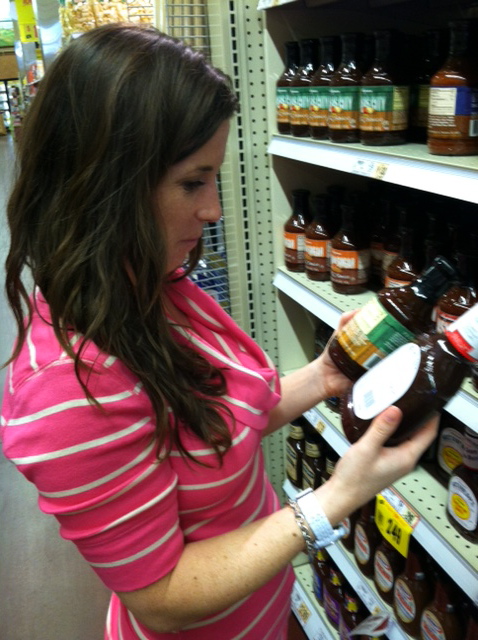
One of our projects during the renal rotation was to go to the grocery store and compare the nutrient content of various condiments. With barbecue season right around the corner, we wanted to see how much sodium, phosphorus, and potassium there was in some of the popular condiments. My partner, Erika Wincheski, and I looked through bottles and bottles of ketchup, mustard, hot sauce, worcestershire, and BBQ sauces.

Not surprisingly, we discovered that many of the sauces have a high sodium content. Especially barbecue sauces! It varied from brand to brand, but we found some BBQ sauces with 175 mg of sodium per serving and others with over 500 mg of sodium per serving. And keep in mind that a serving of sauce is only 2 Tb! I bet there are a lot of people who use more than 2 Tb on their chicken.

After the investigation we put together a handout for the dialysis patients that included a dialysis-friendly recipe for homemade pulled pork barbecue. The DaVita recipe had dialysis-friendly ingredient modifications, such as salt-free ketchup and Sunny Delight in place of orange juice. (Did you know that 1 cup of orange juice has 430 mg potassium, whereas 1 cup of Sunny Delight only has 23 mg potassium?!?) And it's always best to convince people to try a new recipe with a taste test, so we passed out samples during the patients' treatment. Luckily, it was a hit!
Thursday, April 5, 2012
Adventures in Pediatrics
Can Reading a Story Actually Teach Nutrition Behavior Change?
Tuesday, April 3, 2012
What's the Risk?
Here are some quick tips for determining the patient's nutritional risk:
- Was the patient well nourished or malnourished prior to admission?
- Does the patient's diagnosis increase calorie and protein needs?
- What type of diet is the patient tolerating: clear liquids, full liquids, or general?
- If the patient is not tolerating the diet, how many days of inadequate intake?
- Do the patient's medications affect appetite or cause nausea, vomiting, or constipation?
- Are there any swallowing or aspiration concerns?
- Last but not least, does the gut work?
Sunday, April 1, 2012
'Sailing The Chesapeake' - A Theme Meal

The week of our event we were found mostly in the kitchen, prepping all of our recipes so that on theme meal day we’d have little to worry about. The chefs and cooks at Riderwood were so very helpful in answering all of our questions. Jumping right in the kitchen and not being hesitant to get dirty or try new techniques worked in our benefit. I’d like to think that we gained the staff’s respect for actively participating in every step of our theme meal’s preparation and execution.
Did everything turn out exactly how we planned? No (Re: our 'Tangier Sound' strawberry rhubarb cobbler). Did we serve residents a tasty, authentic meal? Yes! Mission accomplished. It was a GREAT food service experience!!

Monday, March 26, 2012
Is Being a Renal Dietitian Right For You?
By Joyce L. Hornick
My first thoughts about being an RD who works in a dialysis center are completely wrong. I thought that specializing in renal nutrition would be pretty much the same as any RD working in the clinical setting of a hospital. The only difference would be that you only deal with people who have End Stage Renal Disease (ESRD) and not many other issues. There would be the occasional help with diabetes and blood sugar control, but not much else.
Four days of working with an RD at a dialysis center with approximately 140 patients showed me how wrong I was. Renal dietitians work in a very clinical atmosphere and are very clinically oriented. Patients with ESRD are on many medications. Most of these medications are directly related to their nutritional status, especially with their phosphorus, potassium, sodium, calcium, and vitamin D levels. They need to take phosphate binders to prevent phosphorus from building up in their tissues and blood. If a patient takes them incorrectly, they may not work efficiently. They can also cause upset stomach, vomiting, and constipation. All of their medications depend on their diet and the dosing of other medications. Dosing needs to be fine tuned on a regular basis. The RD is in charge of these dosing recommendations.
The renal dietitian works very closely with their patients. They know who is good at following their diet and who is not. They know who likes a lot of technical information about food and who doesn’t. One question by a patient about hidden phosphates in salad dressings created an investigative and educational project for all of the patients in the center, complete with a handout, a brief education, and a taste test of ranch dressings with pretzels.
If you think being a dietitian at a dialysis center would be too technical or clinical for you, think again. Even though it does involve these aspects, it involves so much more. You get a lot of personal interaction with patients and get the opportunity to help them over a long period of time.